
Clear Creek, originating from the Continental Divide and winding its way down to the Denver metro area along I-70 through Clear Creek Canyon, offers a convenient and accessible fly fishing experience for Denver locals. This scenic waterway is cherished by anglers for its proximity to home and diverse fishing opportunities. From its headwaters in the high country to its urban stretches, Clear Creek is teeming with trout, including browns and rainbows. Despite its proximity to urban areas, the creek retains its natural beauty, providing a tranquil escape for anglers seeking a quick fishing getaway. With its breathtaking canyon views and thriving fish population, Clear Creek stands as a beloved and convenient option for Denver residents looking to indulge in their passion for fly fishing without straying far from home.
Updated 9/11/2025
Flows near Lawson are 65 cfs, and the fishing down through the canyon has remained good. Dry-Dropper rigs remain the most effective here, and you can "match the hatch" of baetis, Caddis, PMDs, and maybe even some golden stones, if you're lucky!
Updated 8/4/2025
Flows are in the 111 cfs range around Lawson, and Hopper/Droppers are the way to go right now. We've been seeing sporadic hatches of midges, caddis, and yellow sallies, any many terrestrials along the banks.
The summetime T-storms we've been seeing can cause tributaries to swell and cloud up the water. If you find yourself fishing in these conditions, it's best to go upstream and try get above those tribs!
Updated 7/13/2025
The flows here have quickly receeded and fishing is improving by the day! That said, still take caution while wading since flows are still in the mid-200s range.
Hoppers or terrestrials in brighter colors or with some flash have been bringing fish up to the surface. Jigged euro flies or perdigons work great here, and try to match your dropper with what you see hatching. There's been a mix of caddis, PMDs and some golden stones, too!
Spring on Clear Creek in Colorado can offer excellent fly fishing opportunities as aquatic insect activity increases and fish become more active. Here are some effective fly patterns
to consider during the spring months:
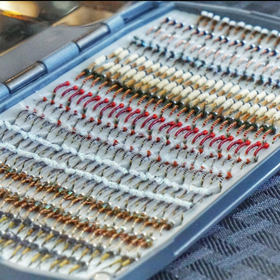
Blue-Winged Olives (BWOs): These may still be prevalent in early spring. Carry patterns like Parachute Adams, Sparkle Duns, or Pheasant Tails in sizes #18 to #22 to imitate BWOs.
Midges: While midge activity remains consistent year-round, it can still be important in spring. Use patterns like Zebra Midges, RS2s (Rim's Semblance 2), Mercury Midges, or Disco Midges in sizes ranging from #18 to #24.
Caddisflies: As temperatures rise, caddis activity increases. Patterns like Elk Hair Caddis, X-Caddis, or Stimulators in sizes #14 to #18 can be effective imitations.
Stoneflies: Stonefly nymphs start becoming more active in spring. Carry patterns like Pat's Rubber Legs, Hare's Ear Nymphs, or Prince Nymphs in sizes #10 to #14.
Streamers: As the water warms up, fish become more aggressive. Woolly Buggers, Sculpin patterns, and other streamers in various sizes and colors can attract larger fish.
Attractor Patterns: Bright and flashy attractor patterns like San Juan Worms, Egg Patterns, or Rainbow Warriors can be effective in catching the attention of fish, especially during runoff periods.
It's essential to observe the water conditions and the behavior of the fish to determine the most effective patterns and presentations. Also, be prepared to adjust your techniques throughout the day as conditions change.