
By the end of this lesson, you will understand:

Fly fishing is a method of fishing that uses a specialized rod, reel, weighted fly line, leader, and artificial fly to imitate the natural food fish eat. Unlike conventional fishing, where the weight of a lure or sinker carries the line during the cast, fly fishing uses the weight of the fly line to deliver a nearly weightless fly. The angler then controls the fly so it behaves naturally in or on the water. Although fly fishing is closely associated with trout, it can also be used to catch bass, pike, carp, salmon, steelhead, bonefish, tarpon, and many other freshwater and saltwater species.
Fly Fishing Is About Imitation and Presentation
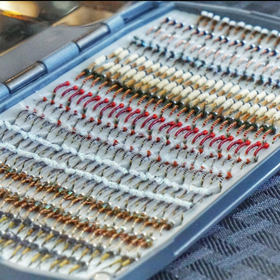
At its core, fly fishing is the practice of presenting an artificial fly in a way that resembles something a fish naturally eats. A fly might imitate:
- An aquatic insect
- A small baitfish
- A crustacean
- A worm, egg, or leech
- A terrestrial insect such as an ant, beetle, or grasshopper.
Some flies closely resemble a particular food source. Others are designed to suggest movement, shape, or color without copying one exact insect or baitfish.
The goal is not simply to place the fly near a fish. The fly must also move naturally. A perfect imitation that drifts unnaturally will often be ignored, while a less exact pattern presented correctly can be very effective.
What Makes Fly Fishing Different?
The biggest difference between fly fishing and conventional fishing is the way the cast works. With conventional tackle, the lure, bait, or sinker provides the weight needed to pull the line through the air. In fly fishing, most artificial flies are too light to cast on their own. The weighted fly line provides the energy needed to carry the leader and fly toward the target. This is why fly casting has a recognizable back-and-forth motion. The angler bends—or “loads”—the rod as the line moves through the air. The rod then transfers that energy into the line and directs it toward the water. Good fly casting is based more on timing and smooth acceleration than strength.
The Basic Fly-Fishing Setup
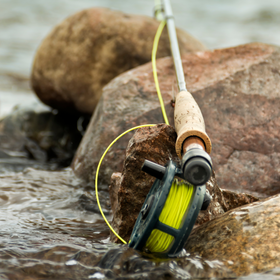
A standard fly-fishing outfit includes five main components:
Fly Rod
The fly rod helps cast the line, control the drift, detect strikes, set the hook, and fight the fish.
Fly Reel
The reel stores the fly line and provides drag when a fish makes a strong run. When fishing for smaller trout, the reel may primarily serve as line storage. For larger fish, the reel becomes an important fish-fighting tool.
Fly Line
The fly line provides the weight needed to make the cast. Fly lines are available in floating, sinking, and intermediate designs for different fishing situations.
Leader and Tippet
The leader is the clear or lightly colored connection between the fly line and the fly. It gradually tapers to a thinner diameter so the fly can land more naturally. Tippet is the final, thinnest section of material attached to the fly.
Artificial Fly
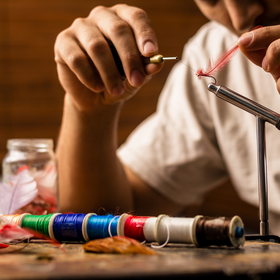
The fly is tied to the end of the tippet. It is typically made from materials such as feathers, fur, thread, yarn, foam, wire, and synthetic fibers.
These components are designed to work together. A properly matched rod, reel, and fly line make learning to cast and control the fly much easier.
The Three Primary Types of Fly Fishing
Most fly-fishing techniques fall into three broad categories.
Dry-Fly Fishing
A dry fly is designed to float on the water’s surface. It may imitate an adult mayfly, caddis, stonefly, midge, ant, beetle, grasshopper, or another food source found above the surface. The angler watches the fly and sets the hook when a fish rises and takes it. Dry-fly fishing is highly visual and exciting, but the fly must usually drift at the same speed as the surrounding current. When the line or leader pulls the fly unnaturally across the surface, it is called drag.
Nymph Fishing
Nymphs are flies designed to imitate immature aquatic insects and other food sources found below the surface. Because trout consume much of their food underwater, nymph fishing is one of the most productive ways to fly fish. The flies may be presented with an indicator, tight-line system, added weight, or a combination of techniques. The challenge is that the angler often cannot see the fly. Instead, the angler watches the indicator, leader, or fly line for a pause, twitch, or unusual movement that might signal a strike.
Streamer Fishing
Streamers imitate larger food sources such as minnows, sculpins, leeches, and crayfish. Rather than allowing the fly to drift passively, the angler often retrieves or swings a streamer to create movement. Streamer fishing can trigger aggressive strikes and is especially useful when targeting larger, predatory fish.
Fly Fishing Is More Than Casting
Casting is important, but it is only one part of successful fly fishing.A long cast is rarely necessary for a beginner to catch fish. In many situations, a short and accurate presentation provides better control and creates a more natural drift. Successful anglers learn to observe:Where fish are likely to holdWhat insects or food sources are presentWhether fish are feeding on the surface or underwaterHow fast and deep the water is movingHow currents will affect the fly line and leaderHow weather, water temperature, and light influence fish behavior. Fly fishing rewards patience, awareness, and problem-solving. Every piece of water presents a slightly different puzzle.
Is Fly Fishing Only for Trout?
No. Trout are popular fly-fishing targets because they often live in clear rivers, feed heavily on insects, and respond well to carefully presented flies. However, fly fishing can be used for a wide range of species. Freshwater fly anglers commonly pursue:Trout, Bass, Panfish, Carp, Pike, Salmon, Steelhead,
Saltwater fly anglers may target: Bonefish, Redfish, Permit,Tarpon, Striped bass, Snook, Barracuda. The equipment, fly patterns, and techniques change depending on the species, but the basic principle remains the same: use the fly line to deliver an artificial fly and present it in a way that encourages a fish to eat.
Why People Enjoy Fly Fishing
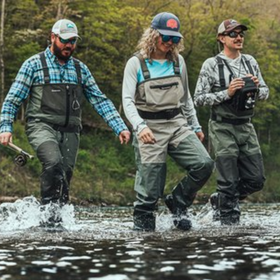
For many anglers, fly fishing is about more than catching fish. It combines outdoor exploration, casting, insect identification, water reading, fly selection, and fish behavior. It can be peaceful and meditative one moment, then challenging and exciting the next. Fly fishing also creates a close connection to rivers and the surrounding environment. Learning to fish well naturally leads to a better understanding of water quality, streamflows, aquatic insects, fish habitat, and responsible resource use. Catching a fish is rewarding, but the learning process is a major part of the experience.

Focus on presentation before distance.
New anglers often believe they need to cast across the river to catch fish. In reality, many trout are caught within 20 or 30 feet of the angler. Practice making short, controlled casts and creating a natural drift. A well-presented fly at 20 feet will usually outperform a poorly controlled fly at 50 feet. Before stepping into the water, pause and observe the area close to the bank. Fish frequently hold in shallow edges, current seams, pockets, and protected water that anglers accidentally walk through.